
An accessibility statement is one of the most overlooked pages on a professional services website, yet it carries real weight. For chambers and law firms, it signals to clients, instructing solicitors, lay clients, regulators and the public that the organisation has considered how its website serves people with a wide range of abilities. It is also, in many cases, a legal expectation rather than a nice-to-have.
This post sets out what an accessibility statement is, why legal websites benefit from publishing one, what it should contain, and how to keep it accurate over time.
What is an accessibility statement?
An accessibility statement is a short, public-facing page on a website that explains:
- How the organisation approaches digital accessibility
- Which standards the site aims to meet, such as WCAG 2.2 level AA
- Any known limitations or areas still being improved
- How users can request help or report a problem
- When the statement was last reviewed
It is not a marketing document. It is a factual record of where the website stands and how the organisation responds to accessibility issues when they arise.
Why do accessibility statements matter for legal sector websites?
Visitors include people with access needs
Around a quarter of the UK population has some form of impairment, whether visual, auditory, motor or cognitive. Many of these users rely on screen readers, keyboard navigation, larger text or high-contrast settings. Instructing solicitors, lay clients, applicants for pupillage and members of the public may all fall into this group. A clear statement helps them understand what to expect and where to turn if something does not work.
It supports compliance
Public sector bodies in the UK have been required to publish an accessibility statement since 2018. Private sector organisations, including chambers and law firms, are not subject to that specific regulation, but the Equality Act 2010 still requires service providers to make reasonable adjustments for disabled people. A documented statement is strong evidence that accessibility has been considered and acted on.
Organisations doing business with EU member states should also be aware of the European Accessibility Act, which came into effect in June 2025 and applies to many private sector firms above certain size thresholds.
It demonstrates professionalism
For a profession built on trust, the way a website handles inclusion says something about the organisation behind it. A well-written statement, kept current, shows that accessibility is treated as a continuing responsibility rather than a tick-box exercise.
It supports search visibility
The same practices that make a website accessible (clear structure, descriptive headings, properly labelled images and links) also support search engine performance. Search engines reward sites that are technically well-built and easy to interpret, and accessible markup tends to be exactly that.
A published statement adds a further layer. It signals commitment and accountability to human readers, including the journalists, directories and referrers whose links contribute to a site’s authority. Transparent policies, named contacts and dated reviews are the kind of credibility markers that thoughtful readers notice, and that contribute to the overall trust a site builds over time.
What should a good accessibility statement contain?
The clearer the statement, the more useful it is. Most well-written examples include the following:
- A short opening commitment to accessibility
- The standard the site aims to meet, typically WCAG 2.2 level AA
- A summary of the steps taken, such as responsive design, semantic structure, keyboard navigation and considered colour contrast
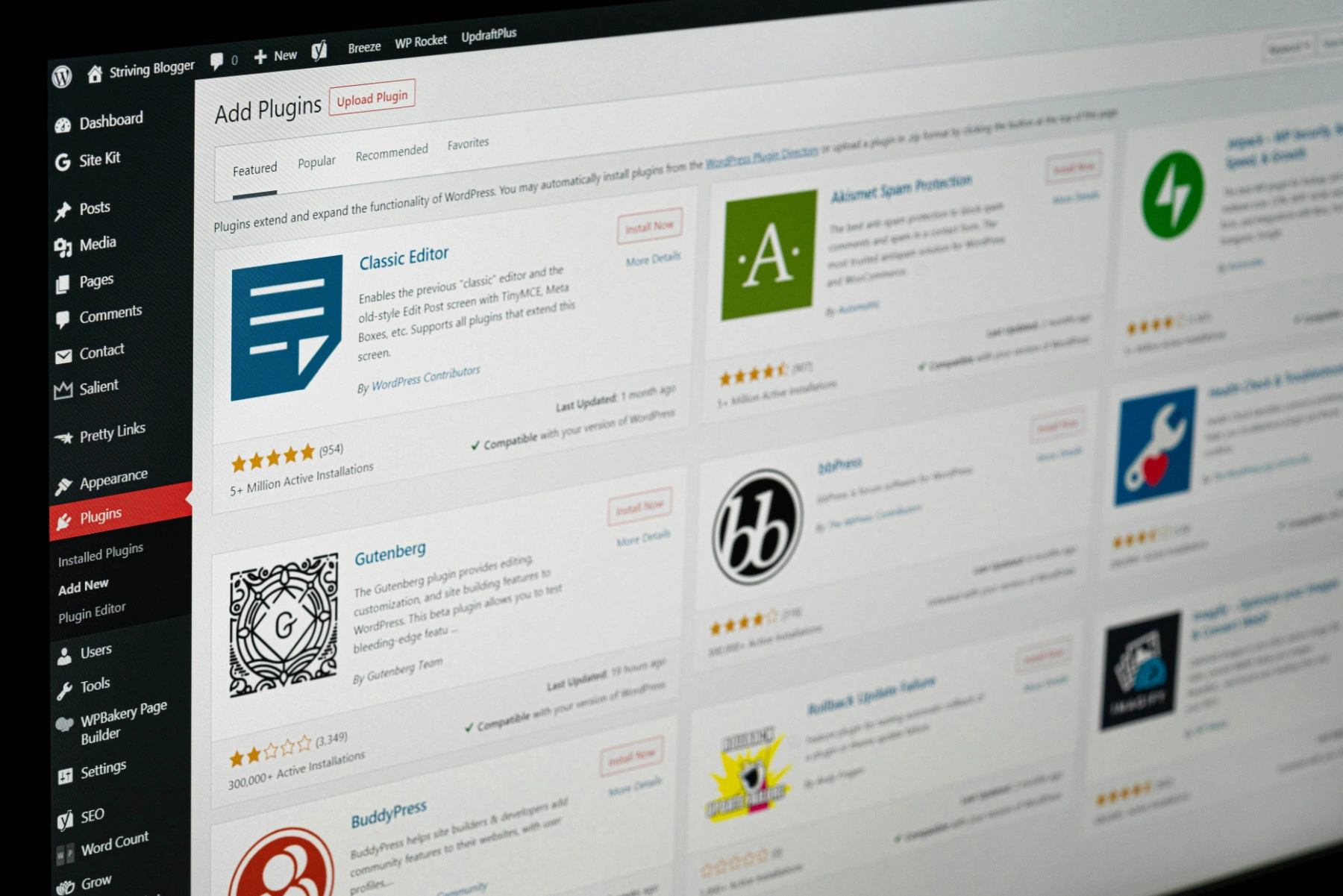
- Honest acknowledgement of known limitations, for example third-party plugins, legacy documents or embedded media that may fall short
- How the site was tested (for example, automated tools, manual checks, or formal user testing).
- Guidance on how users can adjust their browser or device for a better experience
- A clear point of contact for accessibility questions or complaints
- The date the statement was last reviewed
The aim is transparency. Visitors should be able to read the statement and quickly understand both what the site does well and where it is still being improved.
Don’t forget PDFs and other embedded documents
Most legal websites carry a long tail of PDFs: case reports, practice notes, application forms, guidance documents and policies. These are often the weakest part of a site from an accessibility point of view. Many PDFs are exported from Word without proper heading styles, alt text or reading order, which makes them difficult or impossible to use with a screen reader.
A credible accessibility statement should acknowledge this honestly. Where PDFs are known to fall short, the statement should say so and explain what is being done about it, whether that is remediating priority documents, replacing them with web pages, or offering an accessible alternative on request.
For a fuller discussion of why HTML content is usually the better default, and how to produce accessible PDFs where they remain necessary, see the our article Accessible PDFs and why webpages are better.
Reviewing or creating your accessibility statement
For chambers and firms that have never published a statement, or whose existing wording is out of date, a structured review is the most efficient starting point. We use a short questionnaire to capture the information needed to produce or refresh a statement. It covers, among other things:
- When the website was last reviewed or audited for accessibility
- Whether any user feedback or complaints have been received
- The site’s reliance on third-party plugins, embedded documents (such as PDFs and Word files), and video or audio content
- The internal process for updating website content
- Who users should contact about accessibility issues
- How actively the organisation wants to improve accessibility over time
The responses give us a clear picture of where the site stands and what the statement should honestly say. We can then use that data to draft your new accessibility policy. If you are interested in reviewing or setting up an accessibility policy, email [email protected].
Keeping the statement current
Accessibility is not a one-off project. Plugins are updated, content is added, designs evolve and standards change. A statement that was accurate two years ago may no longer reflect the site. Good practice is to review it at least annually, after any significant redesign, and whenever new features (such as video, online forms or document libraries) are added.
A short, honest, regularly reviewed accessibility statement is one of the simplest ways a chambers or law firm can demonstrate that its website is built with all visitors in mind.
Pairing the statement with an accessibility audit
A statement is more credible when it reflects what the site actually does. Some chambers and firms will want to test the site first, so that any known limitations can be acknowledged accurately rather than estimated. Others will be comfortable publishing a statement based on a clear understanding of how the site has been built and maintained.
An accessibility audit is one way to put the statement on firmer ground, particularly where there is uncertainty about how the site performs for users relying on assistive technology. If you would like to discuss an accessibility audit, email [email protected].
For more on the broader case for accessible web design, including the legal context in the UK, EU and US, see our article Designing for everyone: the critical importance of accessible web design.