
In December 2024, we published a guide to Bluesky for barristers and legal marketers, written at a moment when the platform was growing quickly and many users were leaving X. We have recently refreshed that guide to reflect how the platform has matured, and this article steps back to place Bluesky within the wider picture. Eighteen months on, that picture is clearer and rather more nuanced. Bluesky has settled into a steady role, X has changed again, and LinkedIn has strengthened its position as the default channel for the legal profession.
For most chambers and firms, the practical question is no longer which single platform to back. It is where to spend limited time and attention, and what to do once that decision has been made. In this article we revisit the Bluesky question and place it within a broader social media strategy for legal marketers.
The landscape has fragmented
A few trends now shape almost every decision a legal marketer makes about social media:
- Audiences are spread across more platforms than before, each with its own culture and reach
- Organic reach is harder to come by everywhere, and engagement rates have drifted downwards across most networks.
- Discovery is shifting. Search and AI tools increasingly influence how people find legal expertise, which raises the value of substantive, well-structured content over frequent posting.
- For the Bar and law firms, the most reliable returns come from thought leadership: clear commentary on cases, legislation and trends that prospective clients and referrers genuinely find useful.
It helps to treat content like a publisher rather than a noticeboard. One strong piece of analysis, adapted across channels, achieves far more than a stream of announcements.
Is it worth setting up Bluesky now?
Bluesky has grown to roughly 43 million registered users by April 2026, although daily active users sit at a more modest 3 to 4 million. Its rapid 2024 surge has slowed to a steadier pace, and the platform now looks like an established, if niche, network rather than a passing trend.
What matters for legal marketers is less the headline number and more the character of the platform:
- Engagement favours conversation. Replies and genuine discussion carry more weight than likes, and smaller audiences can be more responsive than larger ones elsewhere.
- Journalists and commentators have a real presence. Pew Research has reported that a substantial share of news influencers now maintain Bluesky accounts, which matters for a profession that values media visibility.
- Several chambers and individual barristers were early adopters, as we noted in the earlier guide. Some of the Inns have joined too, though, as that guide notes, a reserved handle and an active presence are not the same thing.
Our recommendation is broadly unchanged, and now better evidenced. There is little downside to reserving your chambers’ or firm’s username and verifying it through your own domain, a free way to prevent impersonation. Bluesky has also added its own blue check for notable accounts, which, unlike X, cannot be bought. Active posting is worthwhile if you have the capacity and an audience there, but for most organisations, we would treat Bluesky as a considered secondary channel rather than a primary one.
Is X dead?
No, but its role has narrowed. X remains one of the largest networks by user numbers, and it is still where a good deal of real-time news, legal journalism and policy debate takes place. For the Bar in particular, many legal commentators, journalists and academics remain active there.
The case for caution is equally clear:
- Engagement has fallen year on year, and organic reach for most accounts is now low.
- Advertiser confidence has declined, and brand safety has become a legitimate consideration for professional organisations.
- The volume of posting required to stay visible is difficult to justify for a small team.
For most chambers and firms, we would suggest maintaining a presence and monitoring relevant conversations rather than investing heavily. X is still useful for listening, for keeping up with legal news, and for being reachable. It is no longer a platform that rewards significant effort for the majority of legal marketers.
Do I need more than LinkedIn?
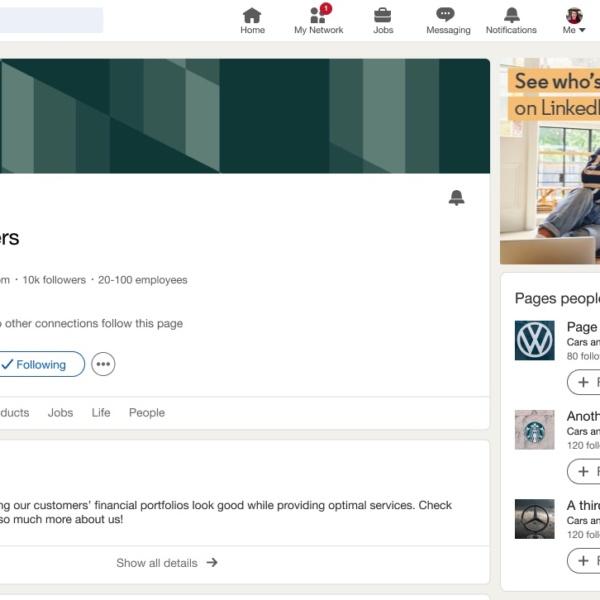
For the legal profession, LinkedIn has become the default and, for many, the most productive channel. It reaches the professional clients, referrers and recruits that chambers and firms care about, and it rewards precisely the kind of content the Bar is well placed to produce.
The formats performing well on LinkedIn include:
- Native text posts that take a clear position on a development in a practice area, rather than simply linking out to a blog.
- Document carousels, uploaded as PDFs, that walk readers through a topic such as the key points of a judgment or a change in legislation.
- Short, plainly filmed video of a practitioner explaining a legal issue in a minute or two.
- Individual practitioner voices alongside the organisational page. Prospective clients increasingly evaluate the person before the firm.
For many chambers and firms, we find a strong LinkedIn presence combined with a well-maintained website does most of the work. Additional platforms are worth adding only where there is a clear audience and the capacity to sustain them.
What about the other platforms?
A brief and honest assessment for legal audiences:
- Threads has grown, but adoption among professional services marketers remains limited. Worth watching, not yet essential.
- Instagram and TikTok are visual-first and suit consumer-facing firms, such as family or personal injury practices, far more than the commercial Bar.
- YouTube, Vimeo and podcasts can be valuable for longer-form thought leadership, particularly when clips and written summaries are repurposed elsewhere. Vimeo in particular suits chambers and firms that want a clean, ad-free video to embed on their own website rather than to build an audience on the platform itself.
The common thread is straightforward: the platform you use should follow the audience you have, not the other way round.
Where should the legal marketer invest limited time and resource?
Being present everywhere is neither realistic nor effective. We would suggest a tiered approach:
- Primary: LinkedIn, for most chambers and firms. This is where consistent effort pays off.
- Maintain and monitor: X, to stay reachable and to follow legal news and journalists.
- Reserve and experiment: Bluesky. Secure your handle, then post if you have an engaged audience and the capacity to do so.
- Opportunistic: visual and audio platforms, where they match a specific audience or campaign.
Two principles should guide how the time is split:
- Follow your audience. The commercial Bar, a high street firm and a specialist set will each weight these channels differently.
- Choose consistency over coverage. A reliable presence on one or two platforms beats a neglected presence on five.
Once you have decided, what should you actually do?
Choosing channels is the easy part. The value comes from how they are used.
- Lead with substance. Commentary on cases, legislation and trends builds authority and travels well between platforms.
- Use a hub and spoke approach. Develop one substantial piece, such as an article or briefing on your website, then adapt it into posts, documents, short videos and updates.
- Combine organisational and individual presence. Encourage practitioners to post in their own voice, supported by the marketing team.
- Automate where it helps. News items and judgment headlines can be posted automatically as they are added to your website, using tools such as Zapier or Make.
- Engage rather than only broadcast. Replies and considered comments build relationships and reach, particularly on LinkedIn and Bluesky.
- Keep accuracy and compliance front of mind. Legal content carries higher expectations, so review for accuracy and tone before publishing, and take care with anything that could be read as advice or as implying a particular result.
- Measure what matters. Track engagement and the quality of conversations and enquiries, not follower counts alone.
Final thoughts
The social media landscape for legal marketers has matured rather than settled. Bluesky has earned a place as a credible, if secondary, channel. X has not disappeared, but for most its role has shrunk to listening and reachability. LinkedIn has consolidated its position as the platform where the legal profession’s effort is best spent.
In our experience, the organisations that benefit most are not those active on every platform, but those that choose a small number deliberately, produce content worth reading, and keep at it.